
Four-nerve Daisy

Scientific name: Tetraneuris scaposa
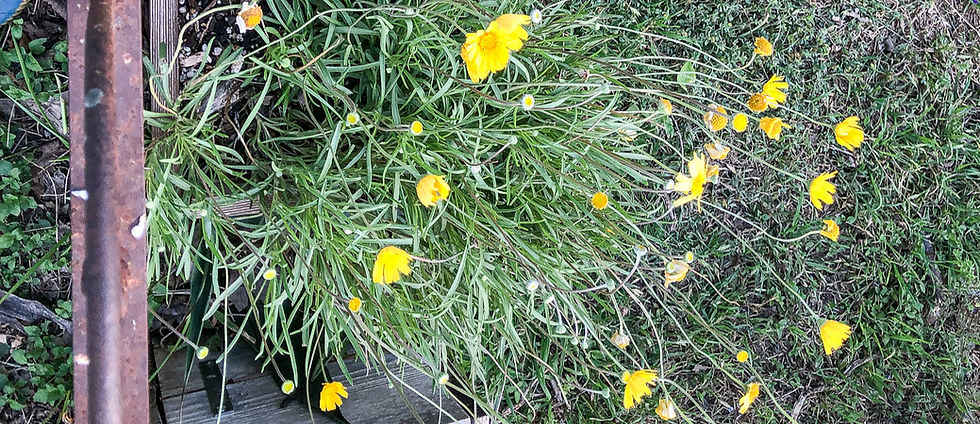


School Related Observations:
What will students see and experience?
When does it flower? Main bloom period is January-December. May bloom year-round in the right growing conditions.
Is it deciduous or evergreen? Semi-evergreen
Is this plant a sensory plant? Yes, it is a sensory plant providing color, gentle scent, tactile leaves, and abundant pollinator activity.
What pollinators are attracted to this plant? Bees, butterflies, hoverflies, and beetles. The blooms provide a steady supply of pollen, when many other plants are dormant.
Educational Outcomes:
The name, four-nerve daisy, comes from four darker veins on the yellow petals (usually reddish or brown) running through it. The four darker veins act like nectar guides, helping insects find pollen. Tiny hairs called, trichomes, grow on the plant. These hairs act like natures version of sunscreen, insulation, and armor all in one. The four-nerve daisy provides a year-round opportunity for students to observe the pollinators and wildlife attracted to it. This perennial can provide students the opportunity to explore plants that do well in xeriscape gardens, garden maintenance, and discussion on preventing soil erosion.
Things to Consider Before Planting Four-nerve Daisy:
Size: 1’ tall by 1’ wide.
Toxicity: Non-toxic
Location: Choose areas that receive full sun and have well-drained soil for optimal growth. Can also be planted in containers. Low-growing height makes it perfect for borders and pathways. This plant stays tiny and tidy!
Invasiveness: Non-invasive
Heat Tolerance: High
Planting time: Spring after last frost for seeds or transplants and early fall in warm climates.
Special Notes: Avoid overwatering as it can cause root to rot. The grass like foliage with bright yellow flowers works well in sunny rock gardens, as a border plant, and in containers. Planting in groups makes for a bright, stunning burst of yellow. Deadhead spent flowers to encourage continuous bloom. Low-growing habits make it accessible to smaller pollinators.


Comments