
April 2026


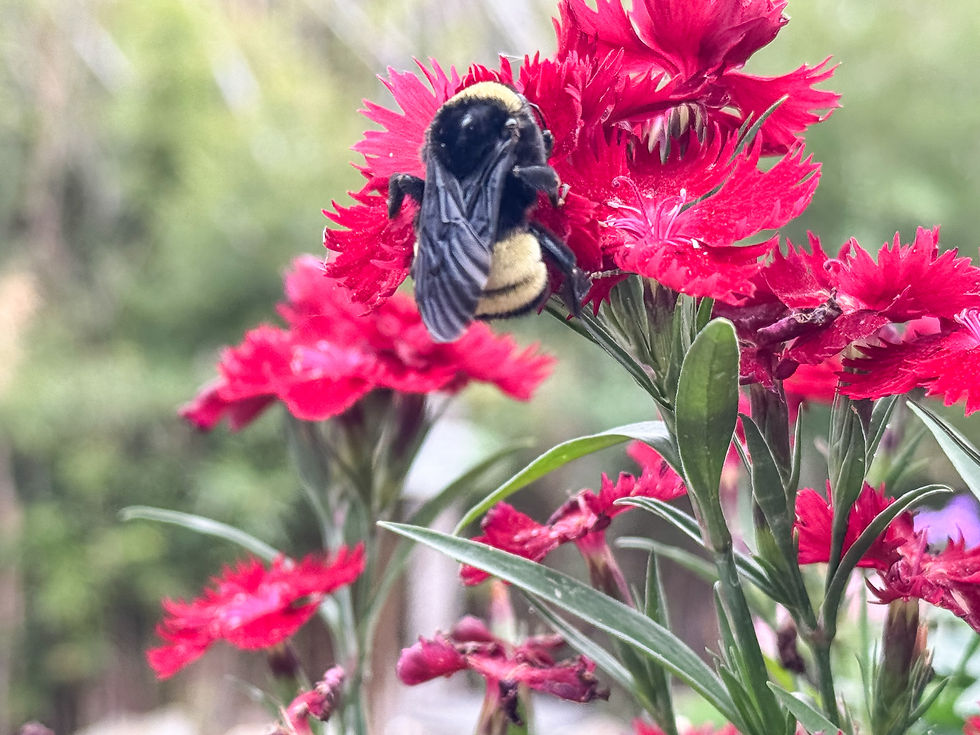
We are fortunate to have lots of bumblebees in our area. Last year we found a bumblebee nest in an abandoned black squirrel burrow, about 100 yards from our main garden. They are docile while foraging and gathering nectar and pollen, but they are ferocious when protecting their nest.
Note that this dianthus is a single-petaled variety which is the most beneficial for bumblebees and other pollinators. Double-flowered dianthus makes it difficult for pollinators to reach the nectar and they often have less accessible pollen. It is best to plant natural, less cultivated varieties in a pollinator garden.

Over the last couple of years, I have placed numerous orders to Joyful Butterfly, an amazing company. I want to give them a much-deserved shoutout for their beautiful, healthy plants. Just look at these milkweed and pollinator plants straight from the shipping box. In all, I’ve ordered nearly 100 plants, and I don’t think we have lost one of them. I encourage new garden helpers to unpack the boxes when they arrive so they can see how plants should be packaged for damage-free shipping. www.joyfulbutterfly.com

This granddaddy of a spiny fence lizard (Sceloporus olivaceus) is trying to warmup after a passing cold front dropped temperatures. (I was able to observe blue patches on the sides of his underbelly, so I know it is a male.) This species of lizard is native to several southern states and northeastern Mexico. Note his long toes and claws. This is a perfect foot for climbing trees, telephone poles, and fences. This is an example of a diurnal, arboreal, oviparous, insectivorous reptile that we enjoy seeing in the garden!
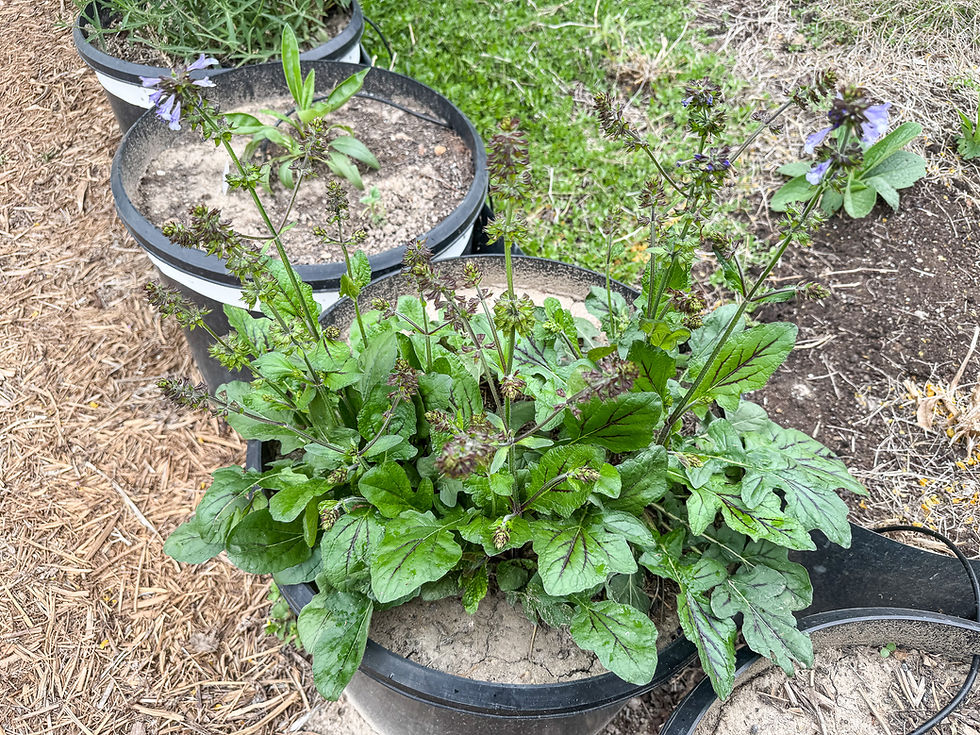
Lyreleaf or Lyre sage, (Salvia lyrata), is member of the mint family (Lamiaceae). Once established, it is a drought-tolerant perennial that can be grown in sun or partial shade. Most of our plants are growing in partial shade, but we have a few in full sun and they flourish! This sage blooms in spring providing food for early pollinators. Its young, tender leaves can be used in salads, but older leaves are bitter.
American goldfinches eat lyreleaf seeds and native bees nest in dead, hollow stems.

We are excited to be included in this comprehensive guide to Texas gardens published by Great Texas Line Press. This 4" x 4" book is the perfect size for a purse, pocket, backpack, or car glove compartment. Our STEAM Garden is featured on three pages, beginning on page 127. The compilation of this book was a time-consuming task, but it can be a time-saving aid for Texas travelers. In the near future, the book will be online with beautiful photographs. Thank you Amy and Susan! We are so glad you found our little garden in the middle of this big state.
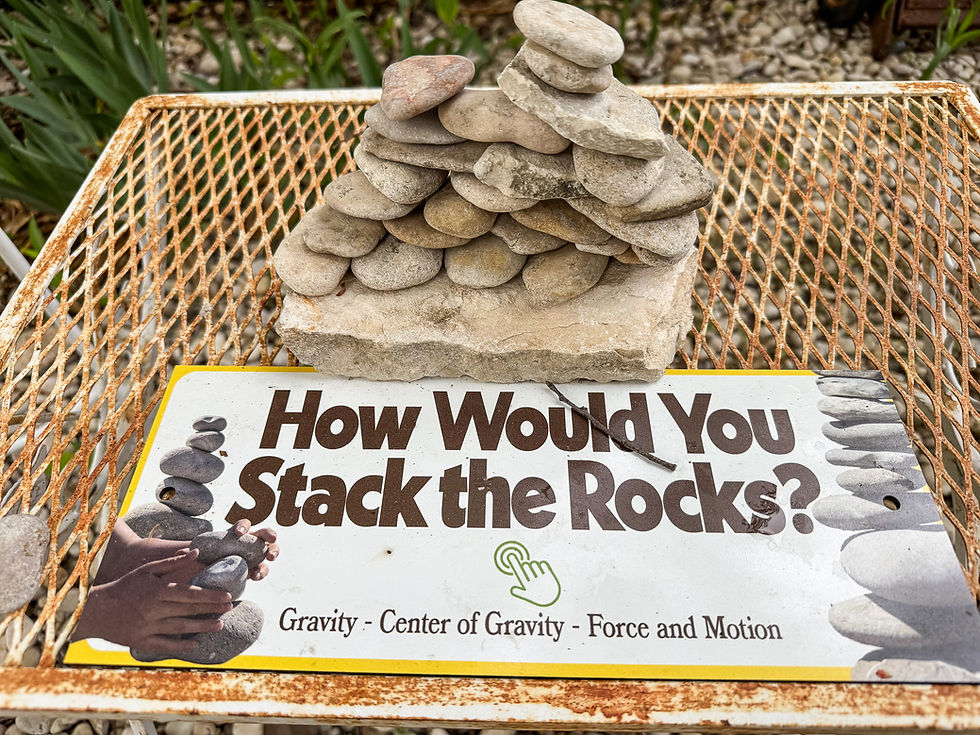
Today the Comfort Heritage Foundation, Inc. had a self-paced tour entitled Why Old Places Matter: How Historic Places Affect Our Identity and Well-Being. My 1926 Dinah Zike Academy building and our STEAM gardens were featured on the tour. It was exciting to welcome hundreds of people to our town and the gardens. Someone on the tour took time to leave us a rock-stacking masterpiece!
Note: This tour was based on Thompson M. Mayes’ book by the same title.
April 12, 2026
Phlox divaricate, or Phlox Louisiana, plants are early-blooming perennials that provide vibrant, fragrant, nectar-rich flowers. Their bloom time is about two months, but what a statement they make during that time. As their flowers fade, later-blooming species take their place.
It is nearing mid-April and we are still experiencing March winds. We are hoping for April showers!
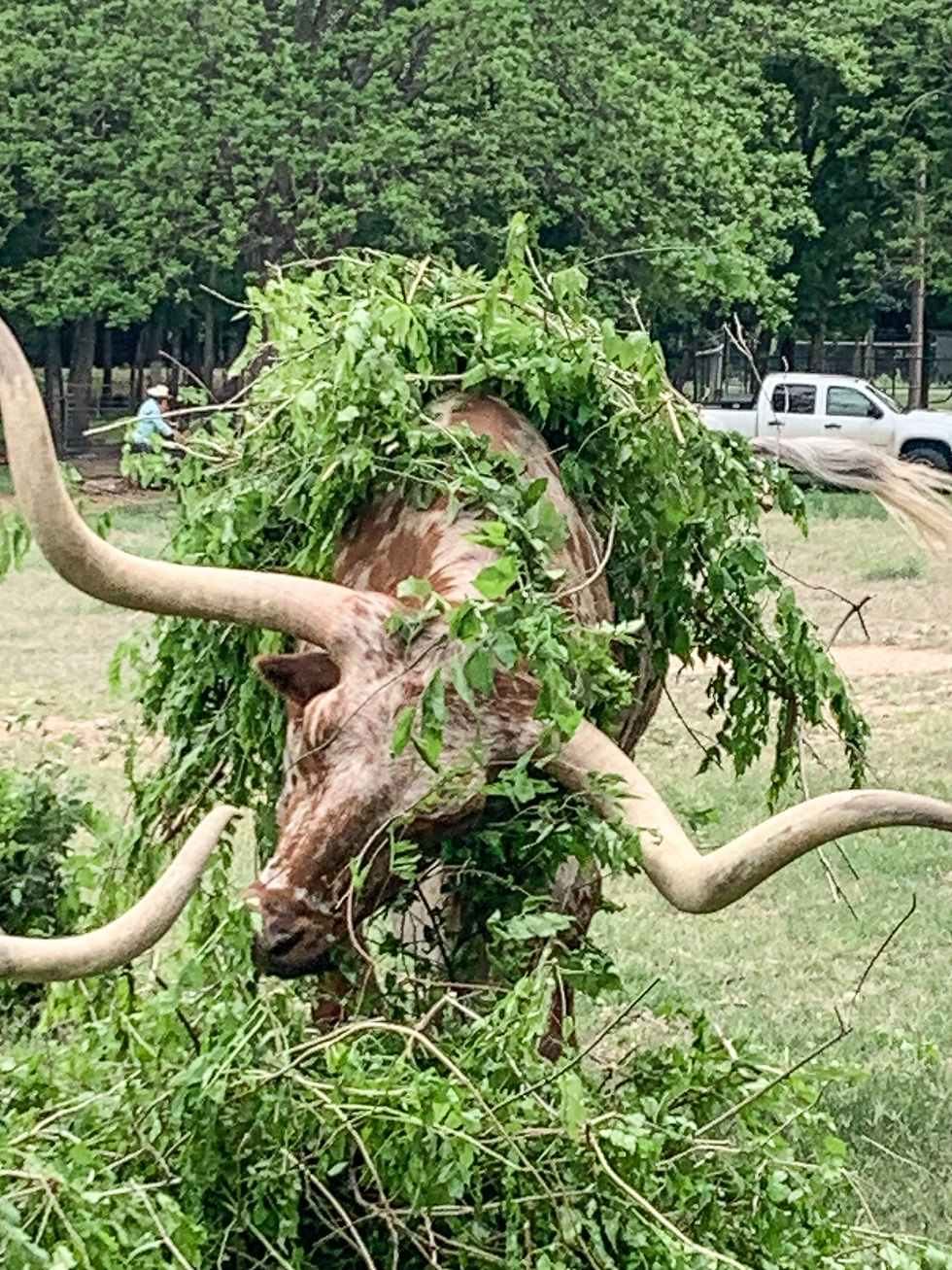
We have been trimming shrubs and trees, cutting back bamboo, and pulling weeds. Our two, huge longhorns come running when they see anyone approaching their field with a wheelbarrow. This is Little Ricky playing with his food. He uses his massive horns to toss fresh cut greens or dried hay before eating. This behavior is a foraging technique. They can be seen using their horns to pull high tree limbs close to their mouths and to clear low-growing brush as they search for food. I think they do it for fun, too!
April 17, 2026
The garden is full of life this time of year. Our ‘wee’ pond, as it has been called, is teaming with life. Some living organisms are very welcome, like this frog, and some are not (especially mosquitos and their larva). Thankfully, frogs, tadpoles, goldfish, dragonflies, birds, and bats will help us control mosquitos during the different phases of their life cycle. Anoles are opportunistic feeders that will also consume mosquitos as well as other insects, arachnids, and a few mollusks like snails.
We use mosquito dunks in our ponds and in any standing water. They contain BTI for biologic control – Bacillus thuringiensis israelensis.

This is a beautiful sight. The cumulative amount of rain we have received between April 18th and April 22nd. We have not received this much rain in this amount of time since the July 4th flood last year.
This realization has brought an emotional flood of deep sadness, traumatic memories, and conflicting feelings as we welcome this life-giving rain nearly a year later.

We buy 2”x2” organza bags to protect seed pods developing on our pipevine plants. These bags are frequently used to hold jewelry or party favors, but they work perfectly to prevent hungry caterpillars from
consuming tender, tasty developing pods. The shear bags allow moisture, light, and air to pass through, and they capture the seeds when the capsules ripen, dry, and burst open. The elongated pods are filled with rows of triangle-shaped seeds. There are dozens of seeds in each pod.

Look at the Calylophus berlandieeri blooming around our 1,200-gallon water collection tank. We also have vines, woodland sage, and inland sea oats growing around four of our larger tanks. Today, a videographer was here filming a human-interest story about our STEAM garden, the Academy, and our use of collected water to supplement our community water supply. He represented, Enduraplas, the company that made the water collection tanks we decided to use.

These beautiful Harlequin Flower beetles (Gymnetic thula) are enjoying our garden fruit plate. Since these two are predominately yellow, I think they are females. You can see by their body shape that they are kin to scarabs. They love plant sap and can be seen on oak trees drinking sap that is oozing from a scar on the trunk or branches. They are good for a garden because the larva are beneficial decomposers and the adults help some with pollination. It is said that they are an indicator of a healthy environment.


Comments